Making the track for the sliding deadman – Part II

So, now I needed to cut the second side of the track for my deadman and I decided to do that with my rip saw (note: this is probably a better experience when its not 90 degrees in your shop).  I marked out my line and created a V with my chisel and  started ripping.

I put the board straight up in my vise and did a fairly decent job of staying on the waste side of the line.

This all worked pretty well until I got to the last 2 inches.  Then I had to get a little creative.
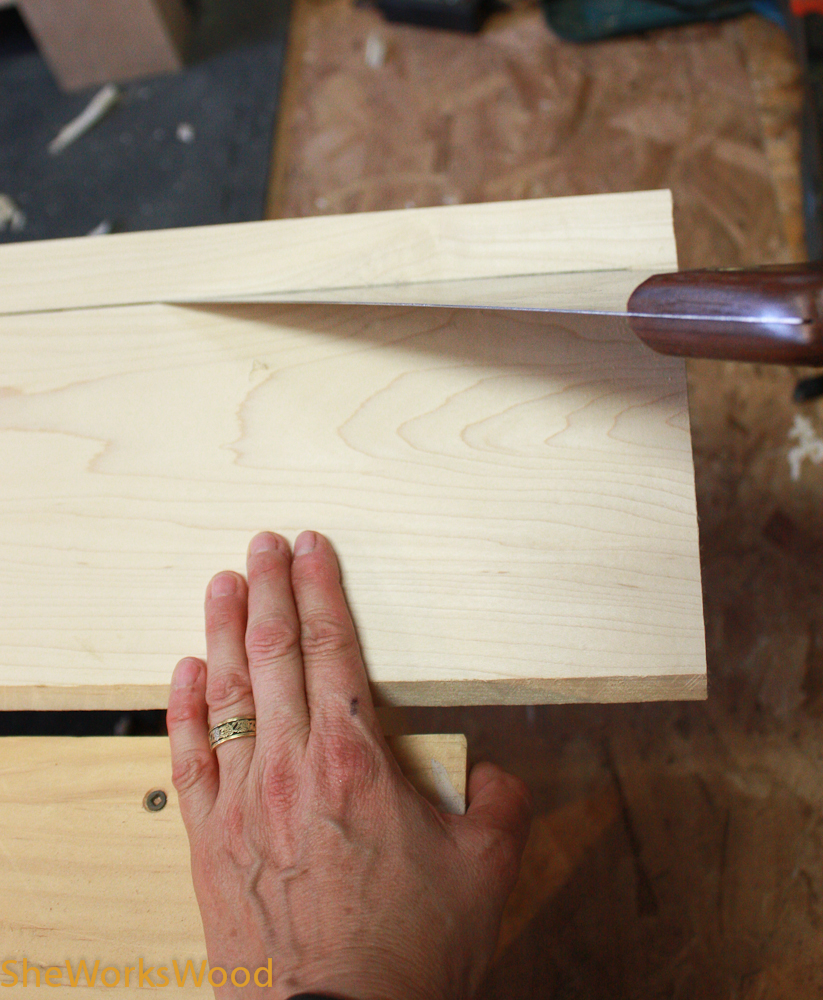
Now I had to figure out how to clean up the new edge I had just created.  I tried sticking it to the very edge of the work bench with turner’s tape and using my Jack plane.  That worked OK.

The best method was using my bench dog with my surface vise and using my block plane to clean things up.  Fortunately, I didn’t need to remove a lot of material, just clean away the saw marks.

An voila!  I had a stick the right size and shape for my track.

Making the track for the sliding deadman

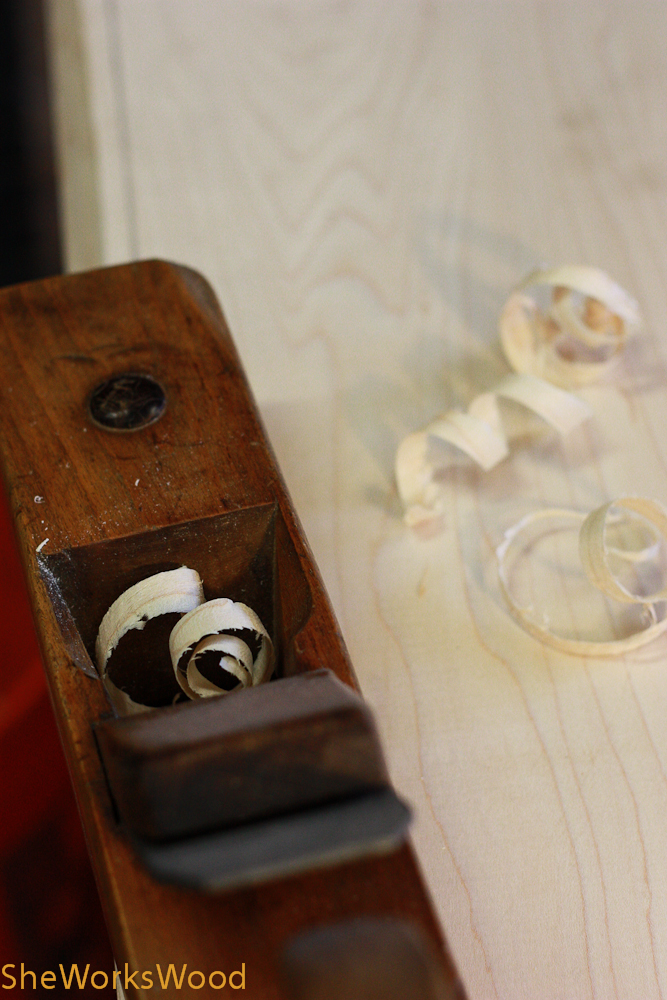
So I debated how to make the track that the bottom of the sliding deadman slides on.  I decided to use my wooden foreplane with the strongly cambered blade to take down the thickness on one side and then try my hand at rip sawing the other side.

So fun with planes first!

I kept track of my progress with the bevel gauge.

Then I cleaned up any ruff patches with my small scraper after getting it to the final surface with my Jack plane.

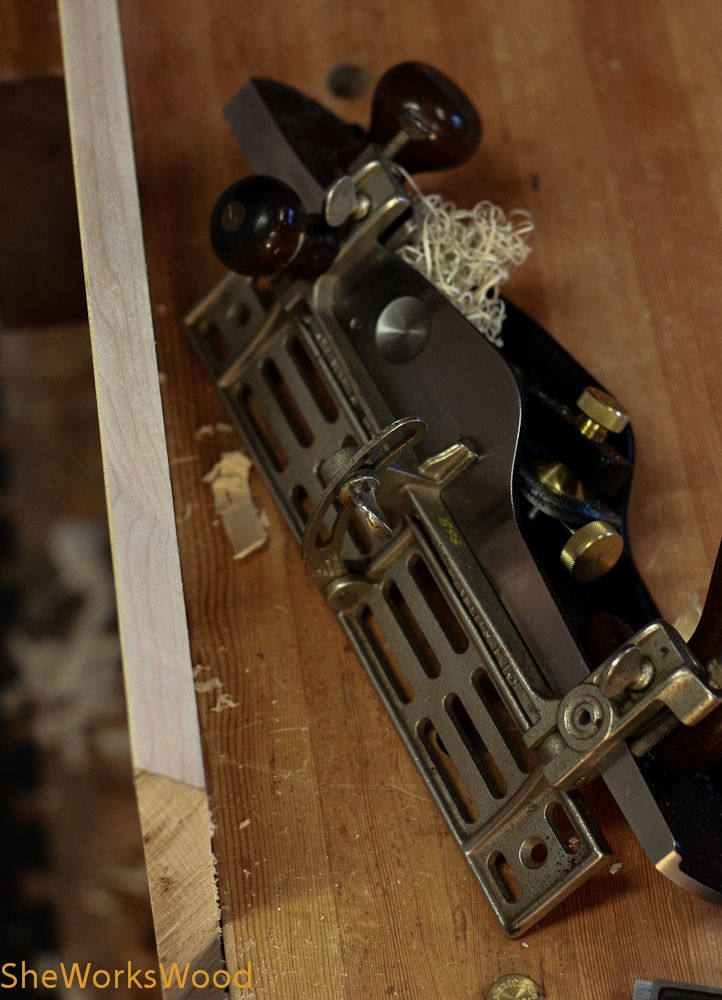
Then I took off the knife edge with my jack plane and jointer fence. Way more fun that scary angled table saw blades.

Rabbets, rabbets, rabbets ..

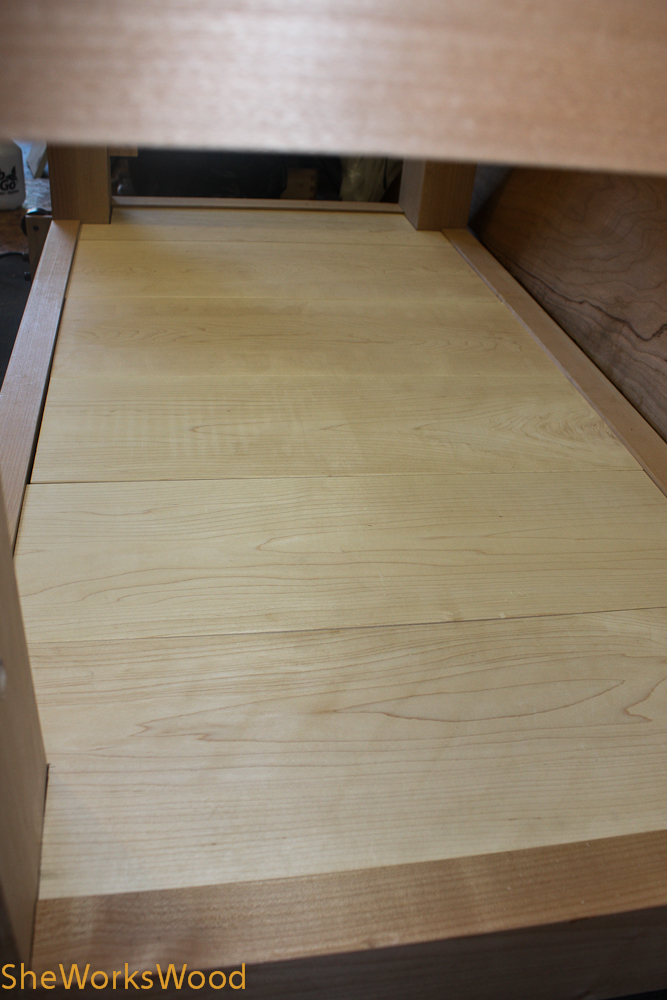
I got the chance to add my shelves into the bottom of the workbench.  The solid wood maple shelf pieces will sit on the ledger strips that I installed earlier.  Each shelf piece has a rabbet on opposite side edges so that the pieces fit into one another.

After the rabbets are all done and some notching to fit the pieces around the legs, it looked like this.  Maple is, to me anyway, surprisingly beautiful.  I’m absolutely wanting to make more with maple.

The picture doesn’t do it justice.

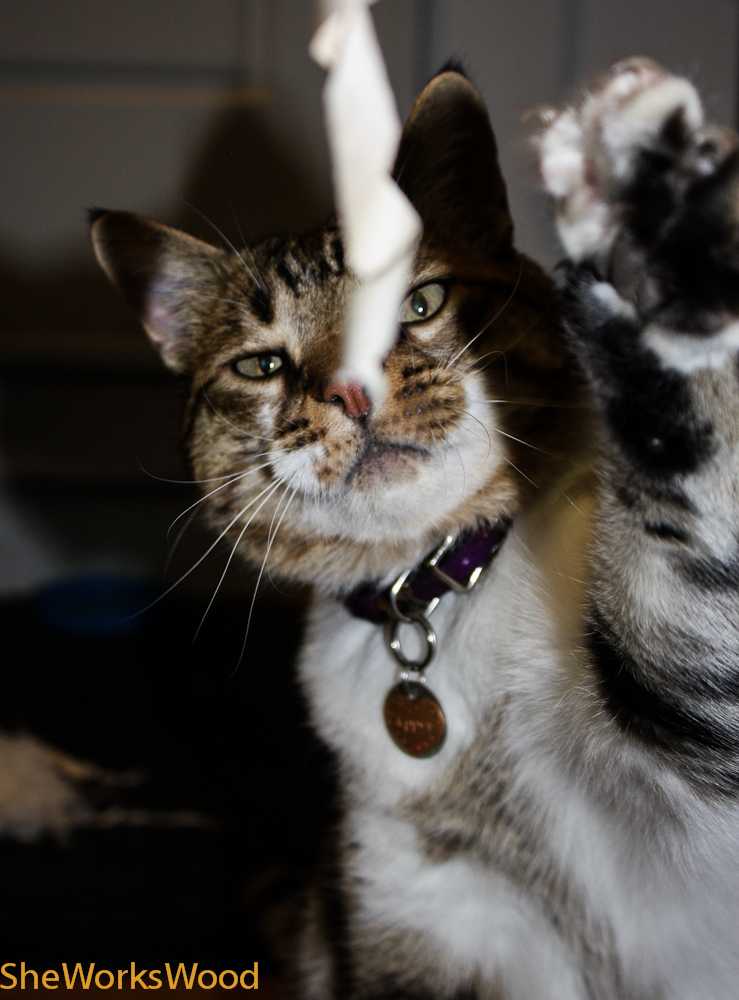
In the meantime, Inspector Kitten assessed the cat toy potential of the maple shaving.


Base and ledger strip installed

I got a chance this week to installed the ledger strip around the base.

I used my skewed rabbet plane to make the grooves and cleaned it up with a chisel plane.  The strip has a 1/2″ groove that’s about an 1/8″ deep.  That fits snuggly into the groove cut into the stretchers.

I’ll be making the shelf next and then on to the deadman.

Wedged Dovetails explained

Chris Schwarz put up an interesting post about wedged dovetails he found in furniture and wondered aloud why these were use -> link .  In the comment section, Kelley Blanton (organ builder) entered a fascinating response.

Here’s a snippet to peak your interest:

The secret to a wedged dovetail is purposefully cutting the tails out of square. … Now the joint can be assembled dry with no glue. It goes together with hardly any effort since the joint is slack everywhere except at the very bottom, where it can be quite tight.

At this point the chest is completely together, no clamps , no glue and no banging on tight fitting dovetails. Glue is brushed into each opening , then a wedge driven in which spreads the pin tight against the dovetail socket and at the same draws the joint down against the shoulder, completely avoiding the need for clamps.

Read more here under the comment Kelley Blanton  – August 6, 2012 at 8:06 am.