
Got a chance today to make some progress on my desk case sides today.

I’m getting better at using my plow plane.
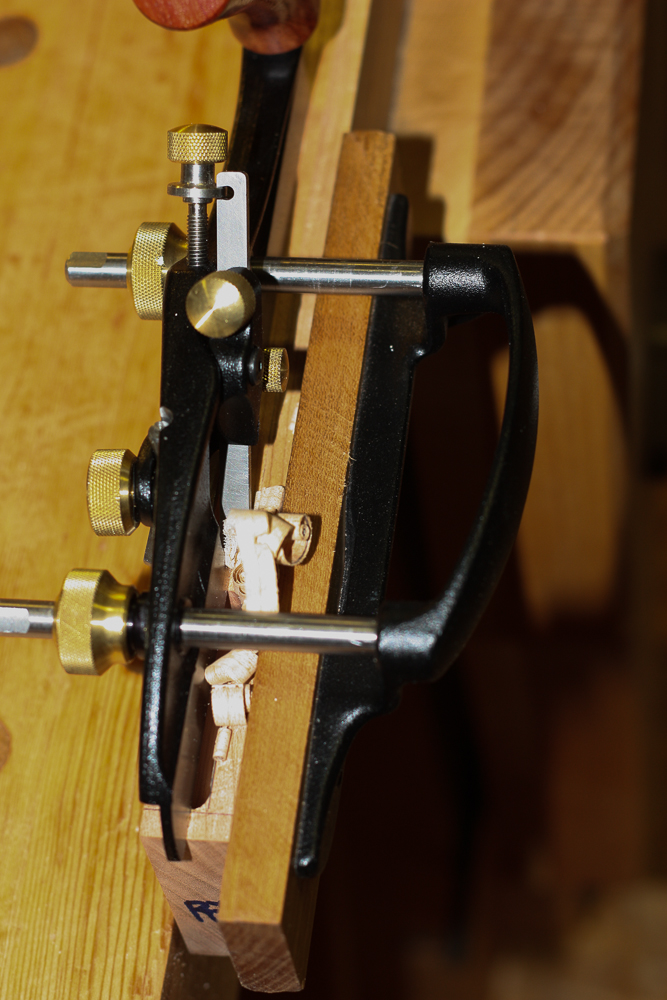

Here’s how its supposed to be done. Click here to see the associated article.
Got a chance today to make some progress on my desk case sides today.
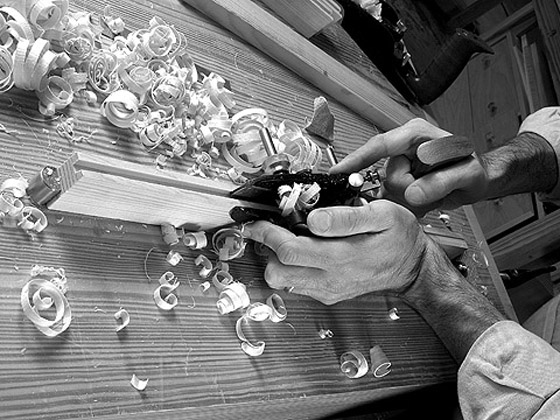
I’m getting better at using my plow plane.
Here’s how its supposed to be done. Click here to see the associated article.

It’s not perfect, but its my first complicated sketch up drawing complete with dovetails, multiple scenes and exploded drawings.
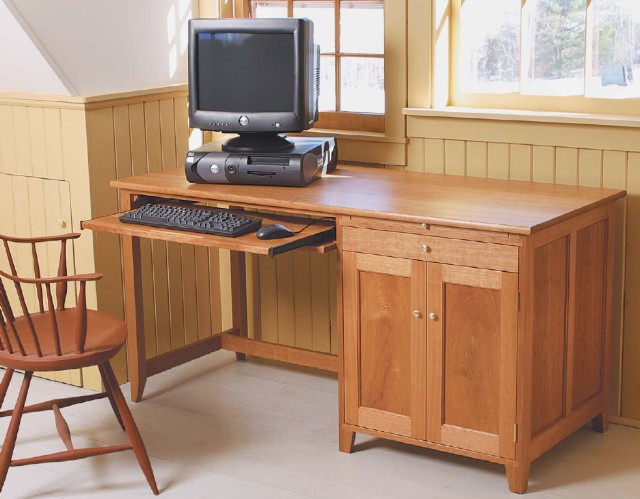
I’ve been thrashing about trying to learn this program. At WIA I won this sketch up pack and I discovered over the weekend that I like it … a lot.
So I still consider myself a beginning intermediate level woodworker. I didn’t grow up wood working, wasn’t exposed plans and the like or other things that would have help my woodworking foundation. I am a geologist by training so at least I have some natural inclination and some training visualizing what I can’t see. And I took a lot of art in high school, so I can draw a little bit.
So I’m determined on my current project (the desk) to visualize where I’m going before I start making it. And I really want to learn sketch up. Here’s my practice along with Robert sketch.

I’m bettin’ by the time I get through disc 2 I’m going to know most of what I need to know.

So the beauty of having an ugly plane that you’re going to use to do rough work is that you don’t have to spent much time cleaning it up. So i didn’t.
I did however, camber the blade .. with my Tormek. I know scandalous. 😉 What would Schwarz say??
I used a wooden template to create a consistent camber and, frankly, I thought it worked pretty well.
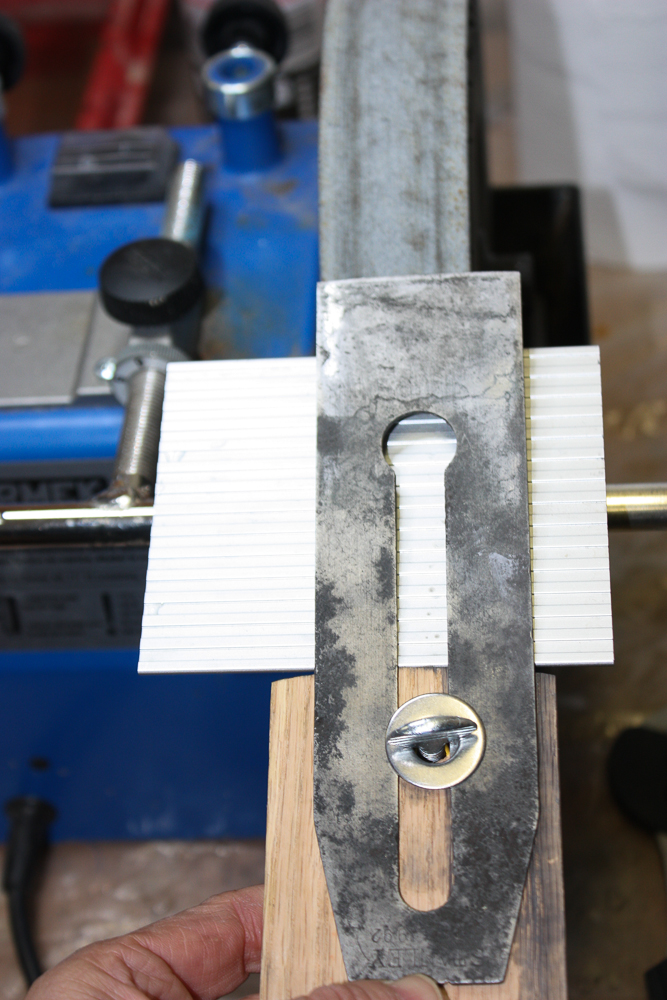
After about 10 minutes, I had a nice camber that I was able to hone in about 30 seconds. If you look close you can see where I colored the primary bevel with marker so I could see the honed edge.

The results, and nicely scalloped, but flat board.

Conclusion, this plane will work just fine!
PS. Information on cambering blades
BTW – I don’t a jointer, so I have to flatten my boards before I put them through power planer.

 sheworkswood.com